


Welcome to our fishbone diagram template gallery! Whether you’re a quality assurance specialist or a risk management professional, and you know the importance of visualizing complex problems and identifying their root causes. That’s why a fishbone template comes in handy. This powerful tool helps you break down a problem into its contributing factors, making it easier to find solutions.
However, finding the right fishbone diagram template can be a daunting task. That’s why we curated a collection of 5 top-notch templates to suit your specific needs. So, let’s dive into our gallery and find your ideal fishbone diagram template to take your problem-solving skills to the next level!
What is a Fishbone Diagram Template?
A Fishbone Diagram Template, also known as a cause and effect diagram or Ishikawa diagram, is a visualization tool for categorizing the potential causes of a problem to identify its root causes.
The fishbone diagrams show the relationship between the effect and the possible causes, divided into smaller causes. These visual diagrams help teams effectively understand and address a problem’s root causes. Thus, it’s widely used in quality defect prevention and product or process improvement.
Top 5 Fishbone Diagram Templates for Quality Assurance
Ready to take your problem-solving skills to the next level? We’ve compiled a list of the top 5 fishbone diagram templates specifically designed for quality assurance professionals. These templates offer a range of features and customization options to suit your unique needs. These will help you make a fishbone diagram in minutes.
Whether you prefer a visually stunning design or a simple layout, there’s a template for everyone. Let’s explore the possibilities and find the perfect fishbone diagram template to enhance your problem-solving process.
1. Smiling Fishbone Diagram By Mulquatro

The Smiling FishBone Diagram by Mulquatro is a top-notch fishbone diagram template and a method that combines functionality and aesthetics to enhance your problem-solving process. With its user-friendly interface and intuitive design, this fishbone diagram template allows you to create visually appealing fishbone diagrams effortlessly.
Whether you’re a seasoned professional or new to the concept, the Mulquatro fishbone diagram template is a great way to identify problems. This is a great tool even for kids to help them identify all the possible causes and sub causes of a problem, and then solve it.
How Does Smiling Fishbone Diagram By Mulquatro Work?
The smiling fishbone diagram depicted is an analytical tool that dissects the problem (in this case, this fishbone diagram example examines the problem of ‘Bad burgers’) into potential factors, categorized into six primary areas: Machines, Methods, Materials, Environment, Measurements, and Personnel.
Each of these major categories branches out from the fish’s spine, leading to more specific potential causes, such as ‘Poor hygiene’ under Machines or ‘Not fresh’ under Materials. This detailed breakdown of the main categories helps teams methodically explore each aspect of the production process to uncover the root causes.
By tracing back along the ‘bones’ of the diagram, teams can identify specific points of failure within the operational workflow, which is critical for implementing corrective actions. The visual layout of the chart encourages comprehensive analysis, promoting a deep dive into each category to ensure no stone is left unturned in the quest to improve the quality of the burgers.
Why Choose the Smiling FishBone Diagram By Mulquatro?
One of the standout features of the Smiling Fishbone Diagram is its extensive customization options and the real time collaboration options for groups and teams. You can easily modify the fishbone diagram template’s branches, text, and fonts to suit your specific needs. This level of flexibility ensures that your fishbone diagram maker not only serves its purpose but also aligns with your personal style.
2. 6M Fishbone Diagram By Mulquatro
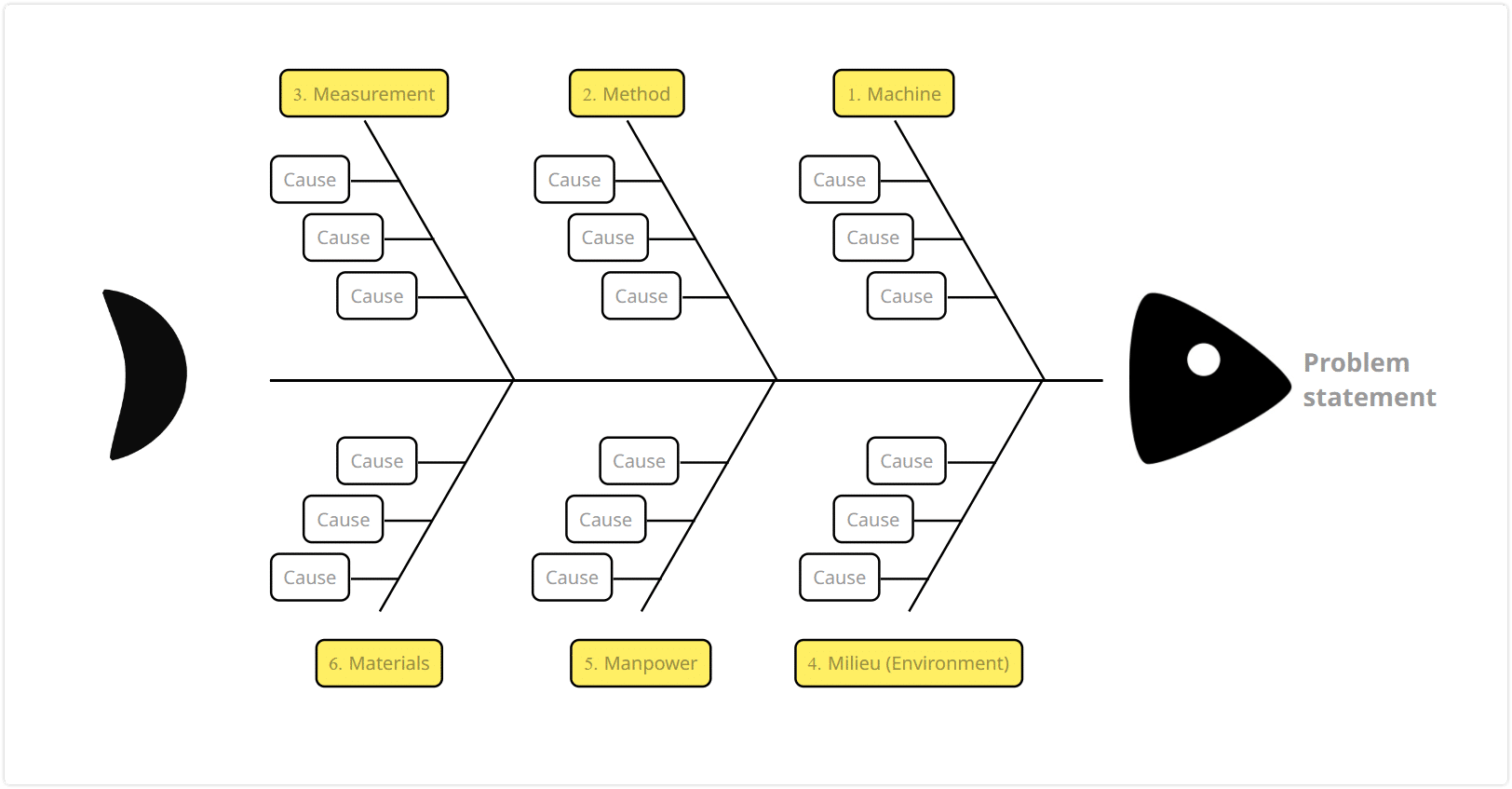
The 6M FishBone Diagram by Mulquatro is an excellent tool for quality assurance professionals seeking a simple template. Whether you’re an experienced practitioner or new to the concept, the 6M FishBone Diagram provides a seamless experience.
How Does the 6M FishBone Diagram By Mulquatro Work?
The 6M Fishbone Diagram by Mulquatro is a structured template designed to meticulously analyze and identify the root causes of a problem, which is briefly stated at the ‘head’ of the fishbone. The spine and the head act as a main arrow. This template incorporates the 6Ms connected as bones:
-
Machine
-
Method
-
Measurement
-
Milieu (environment)
-
Manpower
-
Materials
Each represents a primary category of potential causes that could contribute to the problem statement. These categories are systematically laid out as branches off the main spine of the effect diagram, with individual ‘ribs’ for detailing specific causes within each category.
The visual arrangement of the fishbone diagram template aids in a comprehensive evaluation in deeper levels, prompting users to investigate each category for underlying issues, and it is especially beneficial for team discussions, focusing on dissecting and addressing complex problems by tracing back through the main cause to find sustainable solutions.
You can simply write text (causes) in the text boxes during the brainstorm process.
Why Choose the 6M FishBone Diagram By Mulquatro?
What sets this method apart is its simplicity. It focuses on the six main causes of a problem statement. By narrowing down the factors to these essentials, the 6M fishbone diagram ensures a clear and concise analysis.
The visual layout of the fishbone diagram template is clean and uncluttered, making it easy to navigate and understand. Additionally, the customization options for this fishbone diagram maker are straightforward, allowing you to modify the diagram’s branches and labels effortlessly.
3. Ishikawa Diagram By Mulquatro
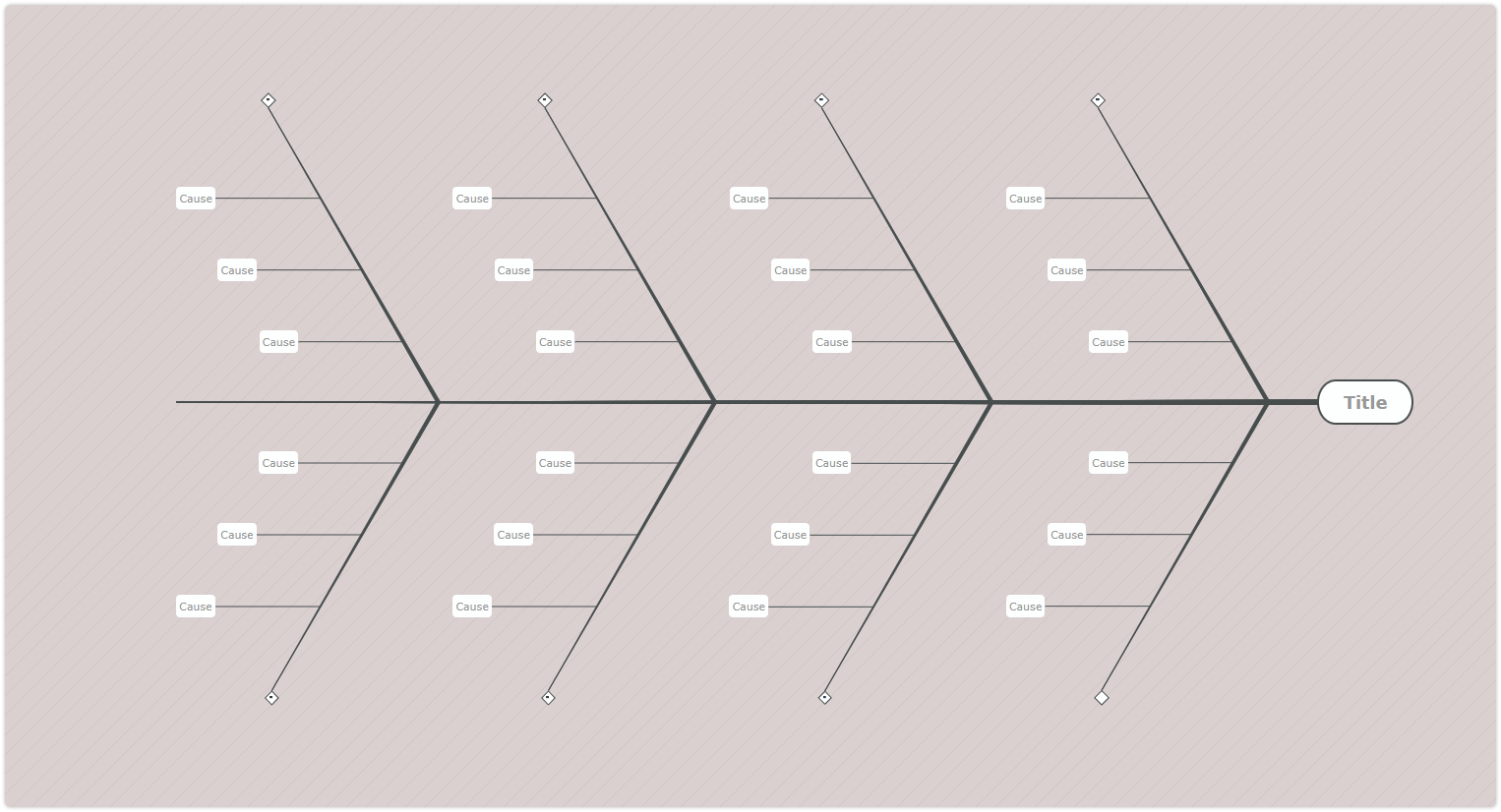
The Ishikawa diagram by Mulquatro, commonly known as a fishbone diagram, is a powerful visual fishbone diagram maker for problem-solving and quality control, widely used across industries to dissect the root cause into more manageable components.
How Does the Ishikawa Fishbone Diagram Template By Mulquatro Work?
It’s unique fishbone-like structure visually mind maps out the factors contributing to all the possible root causes, facilitating a systematic approach to identifying the main problem. Typically, the “head” of the fishbone represents the problem statement to be solved or the effect to be examined, while the “bones” (main branches) radiating off the central “spine” signify different categories of underlying causes, such as methods, machinery, manpower, materials, and more, depending on the specific scenario at hand.
Why Use the Ishikawa Fishbone Diagram Template By Mulquatro?
This is a simple and clean template that offers you the freedom to customize it while creating it. By employing this fishbone diagram maker, teams can collaboratively explore all potential causes of an issue without overlooking any aspect, which is often a risk with fewer visual brainstorming ideas. Each branch created is a path of inquiry, leading to a thorough understanding of the factors at play.
This fishbone diagram maker can be particularly beneficial in quality management processes like Six Sigma’s DMAIC methodology, where it is crucial to analyze issues deeply through the brainstorming session before moving towards improvement and control measures.
4. Fishbone Diagram By Mulquatro

The Fishbone Diagram by Mulquatro is a meticulously designed template that serves as a strategic tool for identifying and analyzing different categories of a specific problem and doing the root cause analysis with quantitative data. Fishbone Diagram template’s distinctive visual format, characterized by the fishbone-like structure, facilitates a detailed breakdown of factors contributing.
How Fishbone Diagram By Mulquatro Works?
The central “spine” of the Fishbone Diagram boldly displayed, leads to the head of the fish, labeled “The problem,” signifying the issue at hand.
From this central axis, colorful “bones” branch out, each representing different categories of causes, which can be customized to fit the specific needs of any investigative process. The branches are color-coded, creating a visually engaging and organized hierarchy of information. These branches lead to smaller “ribs,” where teams can add text to denote individual causes, enabling a granular level of detail.
Why Use Fishbone Diagram By Mulquatro
This Fishbone Diagram template is designed with usability in mind, featuring designated areas with the prompt “Place your text here,” ensuring that users can quickly and efficiently document their insights.
The straightforward layout allows for the simultaneous consideration of multiple causative categories, making it a versatile instrument for root cause analysis in various settings, from corporate troubleshooting to educational problem-solving.
The Mulquatro Fishbone Diagram stands as a testament to the synthesis of form and function, providing a clear, user-friendly canvas for collaborative analysis and solution development.
5. Create Fishbone Diagrams using Mulquatro’s methods
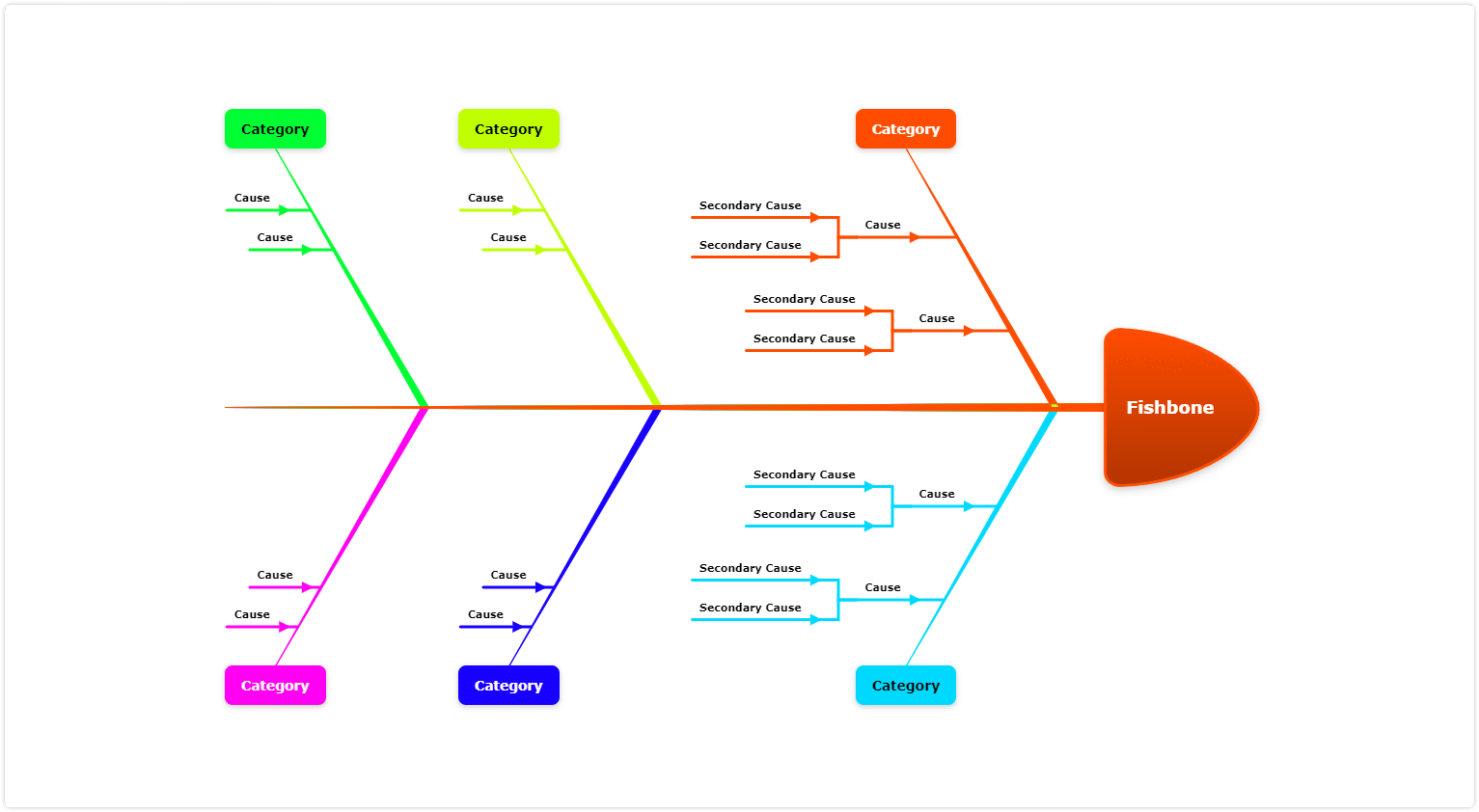
Mulquatro is a diagramming tool that allows you to create fishbone diagrams and other types of diagrams (mind maps, concept maps, timelines, organigrams, outlines, Gantt charts, etc.) from scratch or using a template. Creating a fishbone diagram from scratch means you can use the fishbone layout as a template.
Mulquatro has an elegantly structured Fishbone Diagram layout you can use for mapping out complex ideas, root cause analysis, and their interconnections within a visual framework.
How to Create a Fishbone Fiagram Using Mulquatro’s Layout?
On the Mulquatro dashboard, click on the button “Create”, then choose the Fishbone layout.
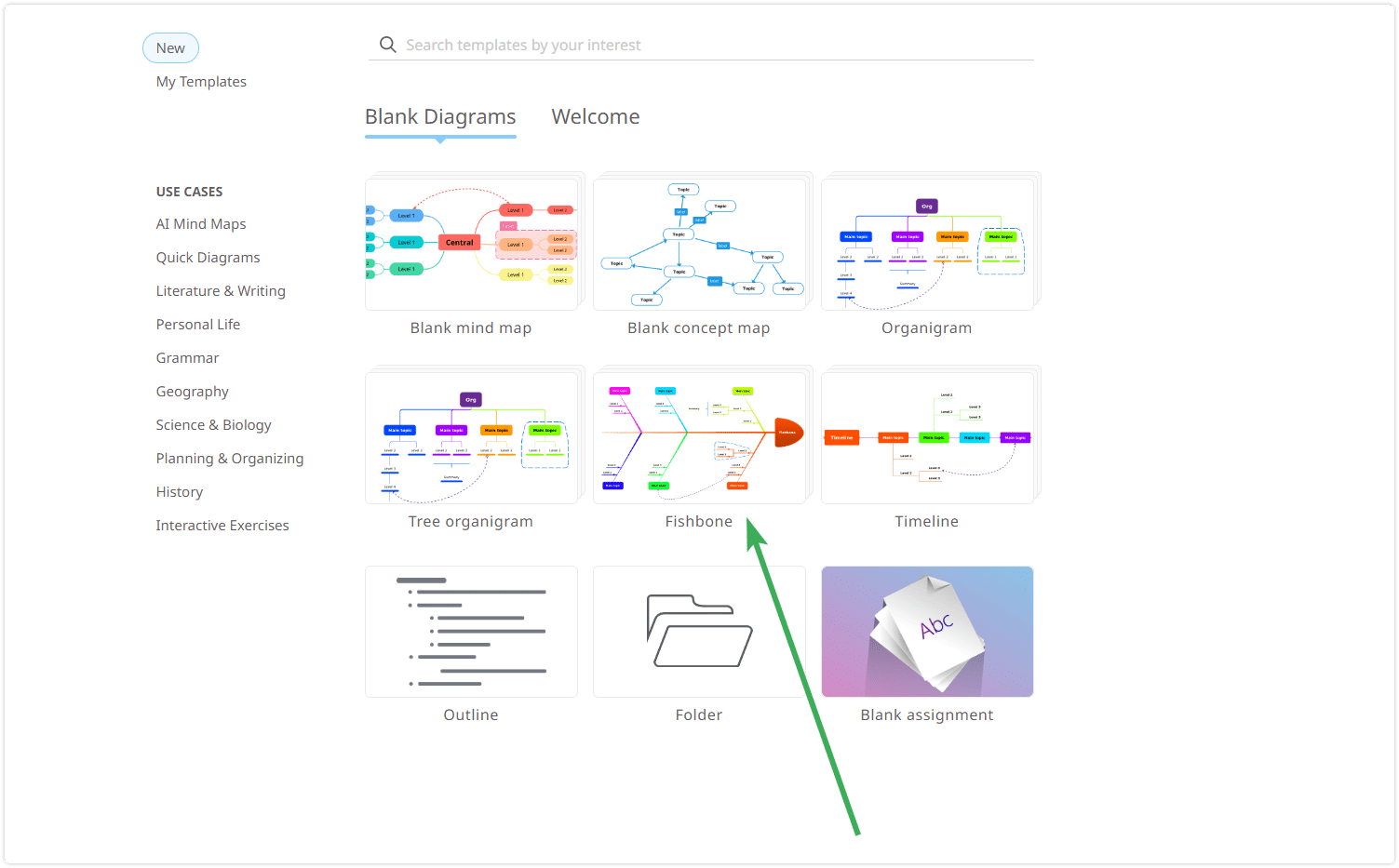
When you hover over it, you can either click on the “Create” button, or you can click on the top-right button to select a different theme for this layout.
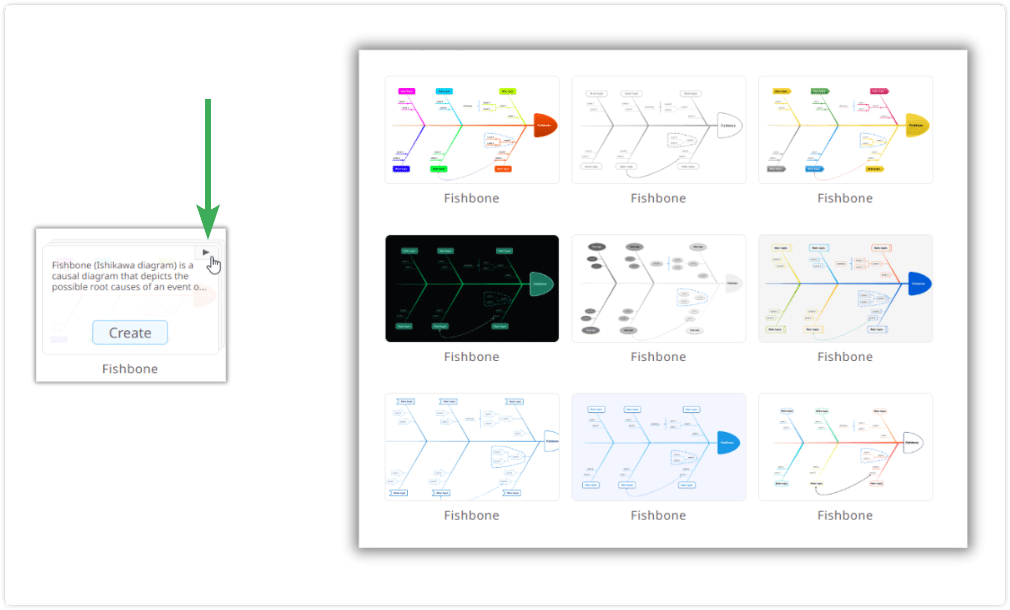
After you choose the theme, click on the “Create” button, and you can start writing the problem in the fish’s head and then identify the primary and secondary causes.
The design of this fishbone diagram template is intuitive, with a clean, minimalist aesthetic that encourages focus and clarity of thought. You can always customize it.
In addition, Mulquatro offers the possibility to switch between layouts, transforming a fishbone diagram into a mind map, outline, organigram, and vice versa.
Why Use Fishbone Diagram Layout By Mulquatro
Adaptable and straightforward, this Fishbone Diagram layout is an essential facilitator for individual or group brainstorming sessions, allowing for a seamless transition from overarching concepts to detailed subcategories and for root cause analysis.
Its user-friendly interface ensures that even those new to concept mapping can navigate and contribute with ease and it also offer freedom in customization processes.
Understanding the Importance of a Fishbone Diagram Templates
Fishbone diagrams are one of the easiest problem solving strategies that can be used by anyone from kids and students to managers and business owners. They allow you to visually map out the various factors contributing to a problem (possible causes), helping you identify its root causes more effectively. This is the first step to analyze the problem and then identify possible solutions.
By breaking down complex issues into manageable components, fishbone diagrams provide a clear and organized framework for analysis.
Why Use Fishbone Diagram Template?
Fishbone diagrams are especially valuable in quality assurance and risk management, where identifying the underlying causes of issues is crucial. They enable you to explore multiple potential causes and their interrelationships, making it easier to determine the most effective solutions.
Using a fishbone diagram template, you can streamline your problem-solving process, saving time and effort.
The visual nature of fishbone diagrams also promotes collaboration and communication within teams. They serve as a common language, allowing everyone involved to easily understand and contribute to the problem-solving process. This can enhance team synergy and generate innovative solutions.
Conclusion
In this blog, we have explored a range of fishbone diagram templates that can assist you in quality assurance and risk management. These templates offer unique designs and features, catering to different preferences and needs.
The Mulquatro templates, with their intuitive layouts and engaging visuals, stand out for their ease of use and ability to facilitate in-depth analysis. The 6M Fishbone Diagram, in particular, offers a comprehensive structure that methodically addresses the multifaceted nature of problem-solving, covering a wide array of potential causes from Machinery to Manpower.
This level of detail ensures a thorough investigation into each aspect of an issue. It is invaluable for teams aiming to understand and resolve complex challenges within their organizations.
Collectively, these templates provide a solid foundation for identifying, analyzing, and addressing the root causes of problems, streamlining the quality assurance process, and enhancing the effectiveness of risk management strategies.
In conclusion, when finding your ideal fishbone diagram template, Mulquatro is highly recommended. With its range of templates, collaborative features, and visually appealing designs, it provides a comprehensive and engaging solution for quality assurance, root cause analysis, mind mapping, and risk management.
So, why wait? Give Mulquatro a try and elevate your problem-solving processes to new heights!
Keep it smart, simple, and creative!
The Mulquatro Team